


Why Choose OEM Artificial Sports Turf for Your Business?
Choosing OEM Artificial Sports Turf is not simply a matter of selecting green fibers and attractive pricing. It is a strategic decision about performance, consistency, maintenance, and long-term control. Grand View Research estimated the global artificial turf market at approximately USD 4.83 billion in 2023. Its report also forecasts continued growth through 2030. However, market forecasts are not guarantees. They cannot replace field testing, installation records, or supplier verification.
OEM production can help businesses tailor pile height, yarn shape, backing structure, infill compatibility, and color. A football academy may need a firm, stable surface for repeated training. A commercial sports center may prioritize shock absorption and easier cleaning. These requirements are different. A serious manufacturer should provide technical sheets, batch records, and independent test results. FIFA’s Quality Programme for Football Turf highlights important performance areas, including ball interaction, shock absorption, seam strength, and durability. These benchmarks give buyers a practical reference before committing to large volumes.
There is no perfect surface.
The Sports Turf Managers Association also emphasizes routine inspection, drainage management, and maintenance planning. That reminder matters because even advanced turf can fail under poor installation or neglected grooming. OEM Artificial Sports Turf offers valuable control, but customization alone does not prove quality. Businesses should compare samples, warranty terms, laboratory data, and lifecycle costs. A cheaper roll may become expensive when seams lift, infill migrates, or replacement arrives late. The strongest choice combines manufacturing experience, transparent evidence, and realistic expectations. That is where OEM value becomes measurable.
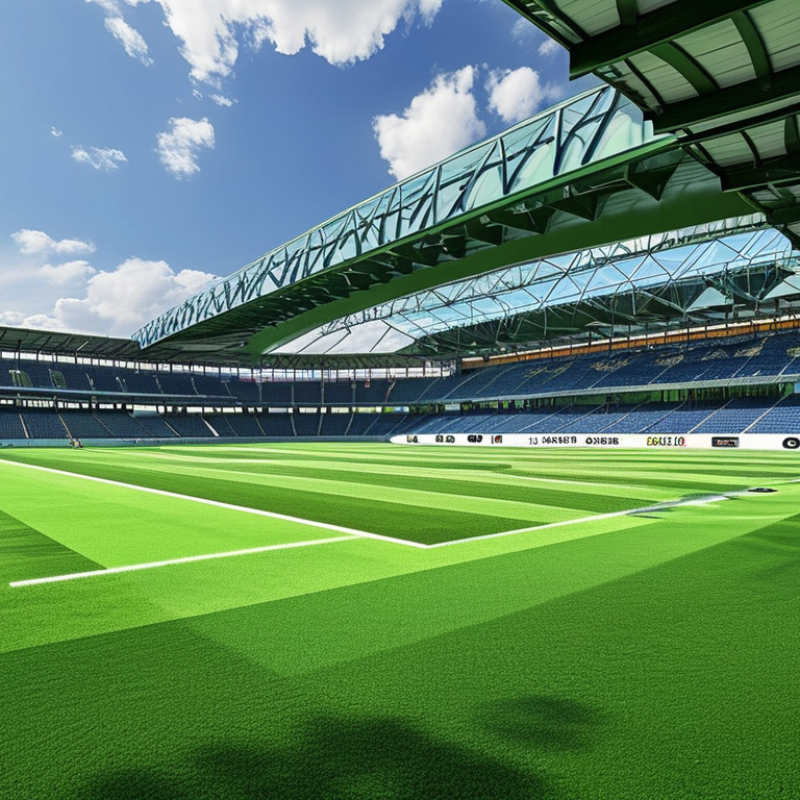
What OEM Artificial Sports Turf Means for Commercial Buyers
Why Choose OEM Artificial Sports Turf for Your Business?
For commercial buyers, OEM artificial sports turf means more than purchasing a standard roll. It usually means ordering turf produced to agreed specifications, such as pile height, yarn shape, color blend, backing, and roll width. A football training facility may need dense fibers and strong drainage. A rooftop recreation area may require lighter rolls and careful surface protection. The specification should match the site, not just the sales brochure.
Experienced buyers request a sample before approving a large order. They check fiber recovery after repeated bending, backing stability, seam behavior, and water flow through the turf. Ask for test reports, production tolerances, and clear warranty terms. Also confirm the minimum order quantity, lead time, packaging method, and replacement process. Small details matter when hundreds of square meters arrive at once. They really do.
OEM production can support consistent color matching across several projects. It may also reduce unnecessary features and control long-term costs. However, the lowest quotation is not always the best commercial decision. A thin backing, uneven tufting, or unclear testing records can create installation delays. Some buyers focus too heavily on appearance during a showroom inspection. That is a mistake worth reconsidering. Turf must perform under traffic, weather, maintenance, and daily use. Buyers should compare complete landed costs, not only the factory price, and keep written approval records for every technical detail.
| Commercial Buyer Dimension | Typical Industry Data or Range | Why It Matters for OEM Purchasing | Recommended Verification |
|---|---|---|---|
| Product Configuration | OEM products can be specified by pile height, yarn shape, stitch rate, backing, color, roll width, and packaging format. | The buyer can align the product with sports clubs, schools, landscaping contractors, rental projects, or retail distribution requirements. | Approve a written technical specification and production sample before placing a bulk order. |
| Pile Height | Common commercial artificial turf pile heights are approximately 20–60 mm, depending on the intended application. | Shorter piles are generally easier to maintain, while longer piles can provide a softer appearance and feel but may require more brushing and infill management. | Measure pile height from the primary backing to the yarn tip at multiple points on the roll. |
| Yarn Material | Polyethylene is widely used for soft, flexible sports and landscape surfaces; polypropylene is often used in thatch or shorter-pile components; nylon is known for higher resilience and cost. | Material selection affects softness, resilience, wear behavior, appearance, and product cost. | Request polymer identification, yarn cross-section information, and third-party test documentation where applicable. |
| Yarn Density | Commercial products commonly specify stitch rate, gauge, and total yarn weight; the actual values vary substantially by sport and construction. | Density influences visual coverage, recovery, material consumption, and resistance to matting. | Compare stitches per 10 cm, gauge, pile weight, and total product weight rather than relying on pile height alone. |
| Backing and Seam Stability | Artificial turf commonly uses a primary backing with a latex or polyurethane coating; some systems include a secondary backing for added dimensional stability. | Backing construction affects tuft retention, roll handling, seam performance, and long-term dimensional stability. | Check coating type, backing weight, delamination resistance, dimensional change, and seam-test results. |
| Drainage Performance | Perforated backings are designed to allow water to pass through; drainage performance depends on hole pattern, sub-base design, installation, and site conditions. | Effective drainage helps reduce surface water accumulation and supports facility usability after rainfall. | Request laboratory water-permeability results and confirm compatibility with the planned sub-base and drainage system. |
| UV and Weather Resistance | UV stability is commonly assessed through accelerated weathering tests, such as ISO 4892-3 or ASTM G154, with the exposure cycle and pass criteria stated in the report. | Verified UV performance is important for outdoor installations exposed to sunlight, heat, moisture, and seasonal weather changes. | Review the test method, exposure duration, color-change results, tensile-strength retention, and test laboratory details. |
| Safety and Sports Use | Sports systems may be evaluated for shock absorption, vertical deformation, rotational resistance, ball interaction, and surface regularity according to the requirements of the intended sport. | A surface suitable for one sport or activity may not meet the performance requirements of another. | Specify the sport, usage intensity, infill system, and applicable standards before requesting testing or certification. |
| Infill Compatibility | Common infill categories include silica sand, performance infill, organic infill, and rubber-based materials; not every turf construction is compatible with every infill. | Infill influences stability, ball response, cushioning, temperature behavior, and maintenance requirements. | Obtain the recommended infill type, application rate in kg/m², brushing procedure, and replenishment schedule. |
| Roll Dimensions and Logistics | Roll width and length are configurable within manufacturing limits; roll weight increases with product width, length, backing, and total yarn weight. | Standardized roll sizes can simplify installation planning, warehouse handling, container loading, and project cost calculations. | Confirm finished roll tolerance, core diameter, maximum roll weight, packaging method, and loading plan. |
| Quality Control | A commercial quality plan may include checks for pile height, stitch rate, yarn weight, roll length, color consistency, backing adhesion, and drainage. | Documented inspection reduces variation between production batches and supports repeat purchasing under an OEM specification. | Use a pre-production approval sample, in-process inspection records, final inspection criteria, and retained production samples. |
| Maintenance Planning | Typical maintenance can include routine brushing, debris removal, infill redistribution, spot cleaning, and periodic professional inspection. | Maintenance frequency depends on traffic, climate, infill, drainage, and the specific surface design. | Request a product-specific maintenance manual and calculate labor, equipment, cleaning, and infill replacement costs. |
| Total Cost of Ownership | The purchase price is only one cost component; installation, sub-base preparation, adhesives, infill, transport, maintenance, replacement, and disposal also affect the total cost. | OEM customization may improve fit and repeatability, but buyers should compare the complete installed-life cost rather than the material price alone. | Prepare a multi-year cost model using the same area, installation method, usage level, maintenance plan, and replacement assumptions. |