Why Choose a File Cabinet for Office Storage?
Why Choose a File Cabinet for Office Storage?
A File Cabinet offers more than a place to hide paperwork. It creates a visible, repeatable system for documents, supplies, and daily decisions. In a busy office, labeled drawers can reduce desk clutter and shorten the search for invoices, contracts, or client notes. The benefit feels simple. That is the point.
Don Norman, a leading design and usability expert, said, “Design is really an act of communication, which means having a deep understanding of the person with whom the designer is communicating.” His principle applies directly to office storage. A well-designed File Cabinet communicates where items belong, who can access them, and how work should move through the room. Lockable drawers also support responsible document handling, while smooth runners and rounded edges improve everyday use. Steel models can withstand years of opening, closing, and relocation. Wood finishes may suit client-facing offices better.
Details matter.
The best choice depends on workflow, floor space, and document volume. A vertical cabinet uses less wall width, while a lateral cabinet makes folders easier to view from above. Mobile units can support flexible teams, but overloaded drawers may become difficult to move. That limitation deserves attention. A File Cabinet cannot repair poor naming habits or uncontrolled paperwork. It can, however, make a clear system easier to follow. Measure the available space, review security needs, and test the drawer action before purchasing. Good storage should feel calm, accessible, and dependable during an ordinary Monday morning.
What Is a File Cabinet and How Does It Support Office Storage?
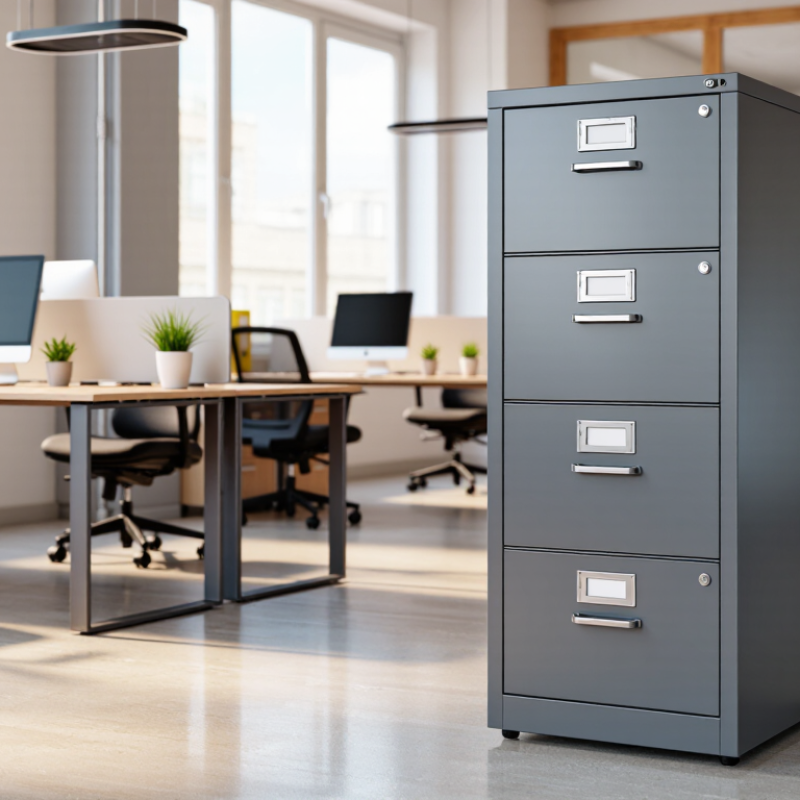
A file cabinet is a purpose-built storage unit for paper records, folders, and office documents. It usually contains drawers, rails, labels, and a lockable frame. Unlike an open shelf, it keeps documents upright, grouped, and easier to retrieve. A well-sized cabinet can turn a crowded corner into a clear filing station.
This matters because paper still occupies real workplace space. The U.S. Environmental Protection Agency’s Facts and Figures about Materials, Wastes and Recycling report states that paper and paperboard represented 23.1% of municipal solid waste generation in 2018. Careful filing can reduce unnecessary piles and repeated printing. Label each drawer by function, year, or project. Leave a little room for new files. Overfilled drawers become difficult to open and may create avoidable safety risks.
In daily office use, I find lateral cabinets useful near shared work areas. They provide a broader top surface and shorter drawer travel. Vertical cabinets suit narrow rooms, but their upper drawers need sensible weight control. Lockable storage also supports controlled access to personnel or financial records. The National Archives and Records Administration emphasizes reliable organization, timely retrieval, and proper disposition of records. A cabinet does not create order by itself. Poor labels still produce slow searches. That part deserves more attention than many offices give it.
Why Choose a File Cabinet for Office Storage?
Standard Document Formats Commonly Stored in Filing Cabinets
File cabinets support organized, space-efficient document storage by keeping papers upright, protected, and easy to retrieve. The chart compares the standard dimensions of A4, US Letter, and US Legal documents. Choosing a cabinet with compatible rails and drawer dimensions helps offices store frequently used records more efficiently.
Dimensions are based on ISO 216 for A4 paper and ANSI/ASME Y14.1 for US Letter and US Legal paper.
Key Benefits of Using File Cabinets in the Workplace
Why Choose a File Cabinet for Office Storage?
File cabinets support faster retrieval, cleaner work areas, and more consistent document control. The McKinsey Global Institute reported that knowledge workers spend about 19% of their time gathering information. A labeled cabinet can reduce repeated searching for invoices, personnel records, and project drawings. Small improvements matter.
A practical cabinet also protects workflow. Lockable drawers help restrict access to sensitive paperwork, although a lock cannot replace clear policies or staff training. Records managers commonly recommend retention schedules, indexing rules, and controlled disposal, as reflected in ISO 15489 records management guidance.
Supporting Safer, More Efficient Storage
In daily use, adjustable rails and full-extension drawers make folders easier to read. Keep heavy files in lower drawers to improve stability and reduce awkward lifting. The U.S. Occupational Safety and Health Administration emphasizes keeping walkways clear and reducing unsafe storage conditions.
File cabinets also make office space more predictable. A team can assign one drawer to active projects and another to archived material.
Yet storage can become a problem when people keep everything. That habit deserves review. An overfilled cabinet slows retrieval, strains drawers, and hides outdated records.
Monthly checks can remove duplicates and flag documents that need secure retention. Measure results honestly: record search time before and after reorganizing. The improvement may be modest, but it is visible.
Types of File Cabinets and Their Suitable Office Uses
Why Choose a File Cabinet for Office Storage?
Types of File Cabinets and Their Suitable Office Uses
A file cabinet does more than hide paper. It creates a clear storage routine and protects records from daily damage. In my office setup experience, the right cabinet reduces searching time near busy desks. It also keeps walkways free from loose folders. Small details matter.
Vertical file cabinets suit offices with limited floor space. Their deep drawers store documents from front to back, making them useful for personnel or financial records. Label folders by year, department, or project. Do not overfill each drawer. Heavy drawers can become difficult and unsafe to open. A small mistake here causes daily frustration.
Lateral file cabinets work better along long walls. Their wide drawers allow folders to sit side by side, so teams can scan labels quickly. They suit shared archives, design departments, and larger project files. Mobile pedestal cabinets fit beneath desks and hold frequently used documents. Lockable models add privacy for sensitive paperwork, while fire-resistant cabinets offer added protection during emergencies. However, these features do not replace a documented storage policy. I have found that offices sometimes buy secure cabinets but forget to control the keys. That weakens the whole system. Choose a cabinet by document volume, access frequency, room layout, and weight capacity.
Best Practices for Organizing and Maintaining File Cabinets
A file cabinet keeps important documents visible, contained, and easier to retrieve.
In daily office work, I have found that organization begins with clear categories, not attractive labels.
Separate invoices, contracts, personnel records, and active projects. Use one subject per drawer when possible. Keep frequently used files between waist and eye level. Store inactive records in lower drawers. This reduces bending and saves time during busy mornings.
Choose simple labels with dates and retention details. Avoid vague names such as “Miscellaneous.” A file should answer three questions: What is it? Who owns it? When should it be reviewed? Use folders with consistent colors or symbols, but do not rely on color alone. A faded label can create confusion. Paper should stand upright, with enough space for new documents. Overfilled drawers damage folders and make retrieval unnecessarily slow.
Maintenance requires a short review each week. Remove duplicates, archive completed projects, and shred documents that no longer serve a legitimate business purpose. Check drawer locks, handles, and rails for wear. Dust can collect around the runners. Wipe surfaces with a dry cloth and repair problems before a drawer jams. My first filing system used too many categories, and staff stopped using it correctly. That mistake taught me to favor practical rules over perfect plans. Leave a small review space. It encourages honest corrections when the system no longer matches the office.