
Global furniture production is becoming more design-led, modular, and internationally sourced. Custom Table Legs now support dining tables, desks, hospitality counters, and retail displays. Buyers are not simply purchasing metal or wood components. They are selecting load performance, finish consistency, packaging quality, and dependable delivery.
Grand View Research estimates that the global furniture market will continue expanding through 2030, supported by residential renovation, commercial construction, and online furniture sales. The Business Research Company also identifies e-commerce and customized furniture as important growth influences. These trends create opportunities for specialized suppliers, but they raise procurement expectations. A supplier may look impressive online, yet its real capability appears in samples, dimensional drawings, coating tests, and repeat-order records.
This guide examines leading suppliers using practical criteria. These include manufacturing experience, material choices, welding or joinery standards, surface treatment, quality inspection, production capacity, and export support. ISO 9001 certification can indicate a structured quality system, although certification alone does not guarantee perfect products. It is only one signal.
Small details matter.
For global buyers, a reliable supplier should explain steel grades, tube thickness, mounting-plate dimensions, carton protection, and tolerance ranges. Freight planning also deserves attention. A beautifully finished leg can still arrive scratched or delayed if packaging is weak. Sustainability claims require evidence, such as recycled-content records or responsible timber documentation. Some comparisons remain imperfect because suppliers disclose different data. That limitation should be acknowledged, not hidden. By combining published industry reports with factory verification and sample testing, buyers can make a more balanced decision when choosing the top Custom Table Legs suppliers for international projects.
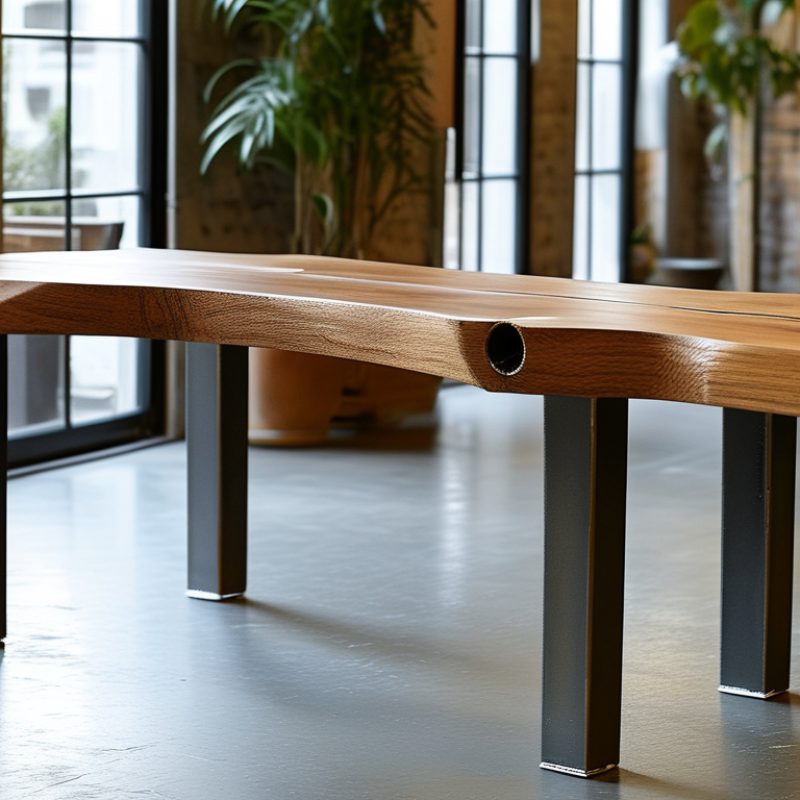
Custom table legs vary by material, geometry, and intended load. Turned solid-wood legs suit dining tables, farmhouse interiors, and restoration projects. Tapered legs create a lighter visual effect for office desks and compact apartments. Steel hairpin legs work well for coffee tables and retail displays, while rectangular steel frames support conference tables and shared workstations. Adjustable legs help level tables on uneven floors. Folding legs serve temporary dining, training, and event furniture.
Application should guide the specification. The U.S. Census Bureau reported approximately $1.98 trillion in U.S. construction spending during 2023, showing the scale of residential and commercial fit-outs requiring durable furniture components. In hospitality projects, powder-coated steel handles frequent cleaning better than untreated mild steel. For outdoor tables, stainless steel or properly protected aluminum reduces corrosion risk. FAO’s 2022 Forest Products Yearbook recorded global sawnwood production near 490 million cubic meters, supporting continued use of responsibly sourced wood components.
A reliable supplier should provide steel grade, tube thickness, wood moisture content, coating details, and tested load capacity. Ask for static and cyclic test results, not attractive photographs. I have seen elegant legs fail because mounting plates were too thin. That mistake is expensive. Designers also need to check screw depth, floor clearance, and replacement availability. Data helps, but every table behaves differently. Overlooking the tabletop’s weight remains a common specification error.
When choosing custom table leg suppliers for global buyers, price is only one test. The World Bank’s 2023 Logistics Performance Index evaluates 139 economies through customs, infrastructure, shipment reliability, and delivery timeliness. These factors matter when steel legs travel across several borders. Ask suppliers for realistic lead times, not attractive promises. Request production photos, inspection records, and a traceable sample.
Material control shows technical competence. Confirm steel grade, tube thickness, welding method, load capacity, and surface-treatment standards. A supplier should explain how each batch is tested. Check whether measurements remain stable after coating and curing.
The UNCTAD Review of Maritime Transport reports that ships carry over 80% of global merchandise trade by volume. Therefore, export packaging deserves careful review. Reinforced cartons, corner protection, moisture barriers, and clear carton labels can prevent costly damage.
Tips: Compare three samples. Test them yourself. Ask for the weakest test result, not only the average. Verify the supplier’s factory address, quality certificates, and corrective-action process. A capable supplier should share inspection criteria before mass production. Also examine payment terms, minimum order quantities, tooling ownership, and after-sales response times. My practical concern is often overlooked: a beautiful prototype may hide unstable production. Buyers should repeat measurements across several units. Perfection is unlikely, but transparent evidence makes risk visible.
Global buyers comparing custom table leg suppliers should begin with materials, not catalog images. Steel offers high load capacity and clean geometry, while aluminum reduces weight for hospitality projects. Solid wood adds warmth, but humidity can cause movement. Stainless steel suits damp environments and frequent cleaning. Ask for material grades, wall thickness, load testing, and corrosion data. A polished sample may look excellent, yet reveal little about long-term performance.
Finishes shape both appearance and maintenance. Powder coating provides consistent color and strong surface protection. Brushed metal hides light scratches better than mirror polishing. Wood stains should match the project’s moisture conditions and cleaning routine. Request physical samples under natural and artificial light. Color differences happen. They can be frustrating.
Tips: Compare one complete sample before placing a large order. Check welds, threaded inserts, leveling feet, and packaging protection. Confirm whether custom dimensions affect stability, tooling costs, or production time. A reliable supplier should provide drawings, tolerance ranges, finish references, and inspection records. Do not rely only on digital renders. They often soften visible flaws.
Customization may include height, mounting plates, folded profiles, concealed fasteners, and mixed finishes. Global buyers should also review installation instructions and replacement-part availability. Small details matter, especially when installers work across different countries. I would also leave room for revision; the first specification is rarely perfect. A practical supplier welcomes measured feedback instead of treating every change as a problem.
| Supplier Profile | Primary Materials | Common Finishes | Customization Options | Typical MOQ | Indicative Sample Lead Time | Suitable Applications | Buyer Checks |
|---|---|---|---|---|---|---|---|
| Precision Metal Fabricator | Mild steel, stainless steel, aluminum | Powder coating, electroplating, brushed or polished metal, clear coat | Tube diameter, wall thickness, height, mounting plate, leveling feet, welded or knock-down construction | 50–200 sets | 7–20 business days | Dining tables, desks, conference tables, retail fixtures | Steel grade, weld quality, load testing, coating thickness, corrosion resistance |
| Solid Wood Component Specialist | Oak, ash, beech, rubberwood, walnut, pine | Natural oil, water-based lacquer, stain, painted finish, wax | Wood species, leg profile, taper, turned details, dimensions, color matching, threaded inserts | 100–500 sets | 10–25 business days | Home furniture, hospitality tables, Scandinavian-style interiors | Moisture content, wood grading, joint strength, grain consistency, sustainable sourcing documents |
| Cast Iron and Cast Aluminum Manufacturer | Cast iron, ductile iron, cast aluminum | Powder coating, baked paint, raw industrial finish, clear protective coating | Decorative patterns, base width, column shape, embedded mounting points, logo-free private tooling | 100–300 sets after tooling approval | 20–45 business days | Cafés, restaurants, outdoor tables, commercial furniture | Casting porosity, dimensional tolerance, base stability, outdoor coating system, tooling ownership |
| Height-Adjustable Table Base Supplier | Steel columns, aluminum components, reinforced polymer parts | Powder coating, anodizing, zinc plating, matte or satin paint | Manual or electric adjustment, control systems, column length, memory presets, cable management | 50–200 units | 15–35 business days | Office desks, sit-stand workstations, ergonomic home offices | Rated load, adjustment cycle testing, noise level, electrical certifications, warranty terms |
| Foldable and Knock-Down Base Manufacturer | Steel tubing, aluminum profiles, engineered wood panels | Powder coating, anodized aluminum, plated hardware, textured paint | Folding mechanism, detachable brackets, packaging configuration, locking system, adjustable feet | 100–500 sets | 10–25 business days | Event furniture, rental tables, compact apartments, export flat-pack furniture | Locking safety, repeated-use durability, carton drop testing, assembly instructions, spare parts |
| Outdoor Furniture Base Supplier | 304 stainless steel, aluminum, galvanized steel, treated hardwood | Marine-grade powder coating, anodizing, brushed stainless steel, exterior oil | Weather-resistant hardware, drainage design, UV-resistant colors, adjustable feet, custom dimensions | 100–500 sets | 15–30 business days | Patios, gardens, seaside hospitality, outdoor dining | Salt-spray performance, UV stability, drainage, galvanic corrosion prevention, outdoor warranty |
| Small-Batch CNC and Prototype Workshop | Aluminum, stainless steel, mild steel, hardwood, engineered plastics | Anodizing, powder coating, brushed finish, clear coat, oil or lacquer for wood | CAD-based geometry, one-off dimensions, complex profiles, rapid prototypes, design revisions | 1–50 sets | 5–15 business days | Design validation, premium furniture, low-volume collections | CAD compatibility, dimensional inspection, surface-finish samples, intellectual-property protection |
| High-Volume OEM Furniture Component Factory | Steel, aluminum, solid wood, plywood, engineered wood | Powder coating, plating, painted finishes, veneer, laminate, natural wood coatings | Private-label packaging, dedicated tooling, assembly, barcode labeling, color matching, product families | 500–5,000+ sets | 25–60 business days | Retail programs, hospitality projects, contract furniture, container-scale orders | Factory audit, quality-control plan, social compliance, packaging tests, production capacity, export documentation |
Note: MOQ and lead-time figures are typical industry ranges for comparison purposes. Actual terms depend on design complexity, material availability, tooling, order volume, testing requirements, and destination market regulations.
Reliable custom table leg suppliers combine practical manufacturing experience with disciplined quality control. They should understand steel, aluminum, stainless steel, wood, and mixed-material construction. Their engineers review drawings, mounting points, load requirements, and surface finishes before production. Small details matter. A misplaced hole can delay installation across an entire shipment. Experienced suppliers also recommend prototypes, rather than relying only on digital drawings. Physical samples reveal wobbling, sharp edges, poor weld penetration, or an unsuitable coating.
Quality control should continue beyond final inspection. Inspectors can verify dimensions, weld strength, coating thickness, color consistency, and packaging protection. Batch records support traceability when problems appear later. Load testing should reflect real furniture use, not only ideal laboratory conditions. Yet inspections are not perfect. A checklist may miss damage hidden inside protective wrapping. Buyers should request inspection photos, test records, and clearly defined acceptance standards. Independent inspections can add useful distance when production schedules become pressured.
International compliance requires destination-specific review. Suppliers should provide material declarations, safety documentation, and accurate product information for each market. Metal coatings may require chemical testing, while wooden components may need responsible sourcing records or treatment evidence. Packaging, labeling, and carton markings also deserve attention. Requirements differ between countries, and old documents may no longer be sufficient. Confirm current obligations with qualified compliance professionals. Keep communication written, including approved samples and tolerance ranges. That creates accountability, although it cannot replace regular supplier audits.
Manufacturing, quality control, and international compliance checklist
This non-company-specific benchmark groups practical checkpoints commonly used when evaluating custom table-leg suppliers. The figures represent the number of review items in a structured buyer checklist, covering production capability, inspection, documentation, and export compliance rather than market share or supplier rankings.
Ordering custom table legs starts with precise specifications. Share dimensions, material, finish, mounting method, and expected load. A simple drawing often prevents expensive revisions. Ask suppliers for production samples before approving a larger order. The sample may look excellent, yet its welds or coating can fail under daily use. That detail deserves attention.
Supplier selection should include manufacturing experience, quality controls, and communication speed. Request test reports, inspection photos, and clear tolerance information. Confirm minimum order quantities, tooling fees, payment terms, and production dates. Shipping requires equal care. Discuss packaging for long sea journeys, moisture protection, carton strength, and spare components. Confirm the delivery term, port details, customs documents, and responsibility for damage. Freight estimates can change quickly. Build a small buffer into your schedule.
Tips: Compare at least three written quotations. Check whether prices include packaging and export handling. Ask for a pre-shipment inspection. Measure the packed cartons, not only the finished legs. Keep every approved drawing and finish sample. I once underestimated packaging space, and the final freight cost rose sharply. That mistake was avoidable. A reliable supplier should explain risks clearly, not promise perfection. Short, documented communication usually works best.
