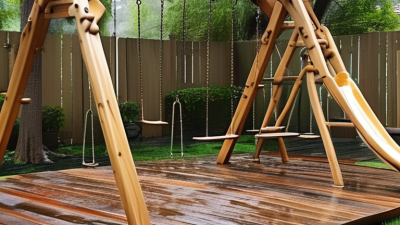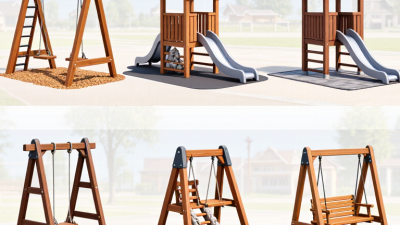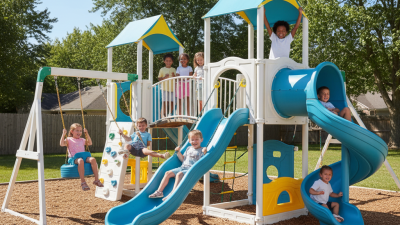
Choosing the best wooden swing set is about more than picking an attractive structure from a catalog. It is a decision about daily play, family routines, space, and long-term safety. A strong wooden swing set should feel stable under movement, resist weather exposure, and suit the children who will use it.
Dr. Joe L. Frost, a respected playground scholar, wrote, “Play is the business of childhood.” That idea matters here. Children need room to climb, swing, imagine, and test their balance. Parents need dependable materials and clear safety information. Look closely at the wood species, protective treatment, hardware, platform height, and swing spacing. Cedar may offer natural resistance to decay, while pressure-treated timber can provide durability when properly maintained. However, no material removes the need for inspections.
Measure the yard before comparing models. Leave generous clearance around the swings, slides, and climbing areas. Check whether the anchors reach firm ground. Examine sharp edges, exposed bolts, splinters, and loose connectors. These small details become important after rain, frost, or months of active use.
There is no perfect set.
A compact model may fit a smaller yard but limit future play. A larger structure may offer more activities but require extra maintenance and supervision. I would also question attractive claims about “maintenance-free” wood. Real outdoor equipment needs cleaning, tightening, and periodic inspection. This guide explains how to compare construction quality, safety features, age suitability, installation demands, and overall value before choosing a wooden swing set.
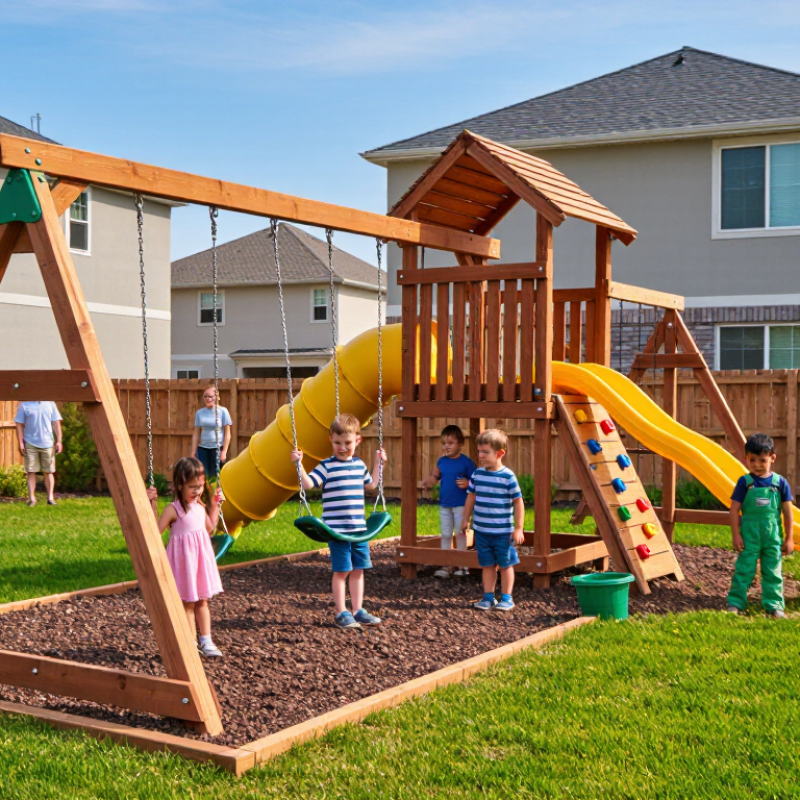
How to Choose the Best Wooden Swing Set?
Define your available space before comparing designs. Measure the yard, then mark the proposed footprint with string. Leave a generous clearance around swings, slides, and climbing areas. A child swinging needs more room than the frame suggests. Check overhead branches, fences, walls, and garden lighting. Soft, level ground matters too. Grass may look suitable, but it can become hard after dry weather.
Think carefully about the children who will use the set. Toddlers need low platforms, short slides, and enclosed access points. Older children may need stronger climbing features and greater height. Consider the number of users at busy times. Two children moving together can create unexpected force. I once underestimated how quickly a quiet play area became crowded. That mistake changed how I judge capacity and visibility.
Safety should guide every detail, not decorate the final decision. Choose stable construction, rounded edges, secure fasteners, and properly anchored posts. Install impact-absorbing surfacing beneath fall zones. Keep the surface clean and deep enough for the equipment’s height. Inspect bolts, wood, ropes, and swing seats regularly. Look for cracks, splinters, rust, and loose connections. Follow the assembly instructions and applicable safety guidance. Adult supervision still matters, even with careful planning. A clear view from the kitchen window is useful, but it is not enough. Candor helps: no wooden swing set remains maintenance-free. Weather changes wood, and children test every weak point.
Define your available space, intended users, and safety requirements before installation.
For a swing set with a 7-foot swing beam, plan for approximately 6 feet of protective space on the sides and 14 feet in front and behind the swings. The larger front and rear zones reflect the common safety recommendation of providing a clearance distance equal to twice the height of the swing beam. Always verify the final layout, surfacing, user age range, and equipment instructions before installation.
Choosing a wooden swing set starts with its material, but construction quality often matters more. Cedar and redwood resist decay naturally, yet they can split, warp, or weaken without regular sealing. Pressure-treated pine usually costs less and offers strong structural performance. However, buyers should verify the treatment label and allow fresh lumber to dry properly. Wood color alone proves little. That shortcut often fails.
Inspect every joint closely. Look underneath, too. Load-bearing posts should rest on stable, level ground and include reliable anchoring. Through-bolts, large washers, and corrosion-resistant hardware generally outperform small screws. Check for rounded edges, capped fasteners, smooth hand grips, and drainage gaps that prevent trapped water. ASTM F1148 provides safety guidance for home playground equipment, including swing-set design and installation considerations. CPSC’s 2021 Playground Equipment-Related Injuries report estimated 187,200 emergency-department-treated injuries involving playground equipment among children under 14. Strong connections and protective surfacing deserve serious attention.
Material selection still involves trade-offs. Cedar feels attractive and naturally resists insects, but its softer grain may dent more easily. Treated pine can handle heavy use, although it may develop surface checking as it dries. No wood is maintenance-free. A practical inspection should look for loose bolts, fungal growth, splinters, and leaning posts every season. I would also question vague claims such as “commercial grade” without timber specifications or load information. Small defects can become expensive problems. A well-built frame is not automatically a well-maintained one.
Choosing a wooden swing set starts with observing how children actually play. A climbing wall may attract a confident six-year-old, yet frustrate a toddler needing low steps. Match platform height, swing spacing, and handgrip size to the children using it now. Then consider growth. An adjustable rope ladder or varied platform levels can extend useful play for several years. I prefer layouts that let adults see every corner from a nearby window or seating area. That practical view matters more than decorative details.
Evaluate construction details closely. Look for smooth, rounded timber, secure fasteners, stable posts, and weather-resistant treatment suitable for outdoor use. Check the ground beneath swings and slides, leaving clear movement zones around each feature. A compact layout saves space, but crowding creates awkward traffic between the slide and climbing area. Measure the yard before choosing the frame, including room for access and maintenance. I once underestimated tree roots and regretted the limited walking space. No layout is perfect.
Age-appropriate play should offer challenge without requiring adult rescue every minute. Toddlers need low platforms, short slides, enclosed openings, and supportive handholds. Older children may enjoy monkey bars, taller decks, and creative routes between activities. Still, age labels are only a guide. A cautious five-year-old and an adventurous five-year-old may need different layouts. Review weight limits, installation instructions, and inspection schedules before purchase. Use current manufacturer instructions and recognized playground safety guidance. I would not choose the largest set automatically. Bigger is not always better.
| Evaluation Dimension | What to Check | Recommended Standard or Range | Best Fit by Age | Why It Matters |
|---|---|---|---|---|
| Overall Footprint | Measure the complete play structure, including swings, slides, ladders, and the required safety zone. | Allow at least 6 ft (1.8 m) of clear space around the structure; swing movement may require additional front and rear clearance. | All ages | Adequate clearance helps reduce collisions with fences, walls, trees, and other equipment. |
| Platform Height | Compare the elevated deck height with the child’s climbing ability and confidence. | Lower platforms are generally more suitable for preschool play; taller platforms offer more challenge for older children. | Preschoolers: low deck School-age children: medium to tall deck |
A lower center of gravity and shorter fall height can make early climbing activities easier to manage. |
| Recommended Age Range | Read the manufacturer’s age and weight guidance for every component, not only the overall set. | Choose equipment specifically labeled for the child’s age group; do not rely on appearance alone. | Typically divided into 2–5 years and 5–12 years | Slides, swings, ladders, and climbing walls may have different suitability limits. |
| Swing Configuration | Check the number of seats, spacing between seats, attachment points, and seat style. | Use secure, age-appropriate seats with sufficient separation to help prevent contact during movement. | Bucket-style seats: younger children Flat or belt seats: older children |
The right seat design supports balance, grip, and safer independent use. |
| Slide Design | Review slide height, length, slope, exit area, and whether the surface has sharp edges or exposed fasteners. | The slide should match the platform height and provide a clear, unobstructed landing zone. | Short, low slides: preschoolers Longer slides: school-age children |
A suitable slope and clear exit help children maintain control when leaving the slide. |
| Climbing Options | Evaluate ladders, climbing walls, rope elements, handholds, rung spacing, and grip size. | Choose stable, easy-to-grip climbing features with no excessive gaps or loose components. | Simple ladders: younger children Climbing walls and ropes: older children with supervision |
Different climbing elements build coordination and strength at gradually increasing difficulty. |
| Guardrails and Barriers | Inspect elevated platforms for protective rails, openings, and possible entrapment points. | Platforms should have secure guardrails or protective barriers appropriate to the structure’s height. | Especially important for children under 5 | Barriers help prevent accidental falls from elevated play areas. |
| Wood Quality | Look for smooth surfaces, rounded edges, sound joints, and wood treated for outdoor exposure. | Use structurally sound outdoor-rated wood with no splinters, cracks, rot, or exposed sharp hardware. | All ages | Routine inspection is still necessary because weather and regular use can affect wood over time. |
| Structural Stability | Check the base design, anchoring method, bracing, hardware, and resistance to side-to-side movement. | Anchor the set according to the assembly instructions and install it on stable, level ground. | All ages | A stable frame reduces tipping, shifting, and excessive movement during active play. |
| Protective Surfacing | Assess the ground below and around elevated equipment for impact-absorbing properties. | Use an appropriate impact-attenuating surface rather than bare soil, concrete, asphalt, or hard paving. | All ages; essential under elevated components | Protective surfacing can reduce the severity of injuries from falls. |
| Layout and Traffic Flow | Position swings, slides, climbing routes, and entrances so children do not cross active travel paths unnecessarily. | Keep the slide exit and swing arc clear of walkways, fences, seating, and other play features. | All ages | A well-planned layout reduces interference between children using different activities. |
| Play Variety | Count the types of activity available, such as swinging, sliding, climbing, crawling, balancing, and imaginative play. | Select a balanced mix that matches the available space and the children’s interests. | Younger children: basic movement and pretend play Older children: more challenging climbing and balance |
Multiple play modes can support physical activity, coordination, and creative social play. |
| Supervision Needs | Consider sightlines from the home, seating area, or garden and the level of supervision required. | Keep the structure visible and provide closer supervision for younger children or challenging features. | Close supervision: toddlers and preschoolers Periodic supervision: confident older children |
Adult oversight should reflect both the child’s ability and the complexity of the equipment. |
| Maintenance Access | Check whether all bolts, brackets, platforms, and wooden surfaces can be inspected and maintained easily. | Plan regular checks for loose hardware, splinters, corrosion, wear, water damage, and fading. | All ages | Ongoing maintenance helps preserve structural integrity and play safety. |
| Future Usability | Consider whether the layout and challenge level will remain useful as children grow. | Choose modular or adaptable features only when additions are compatible with the original structure. | Growing families and mixed-age play | A thoughtfully selected set can remain engaging longer without exceeding safe design limits. |
Safety standards should guide every purchase. Look for clear testing information and age recommendations. The frame should have rounded edges, smooth surfaces, secure bolts, and strong swing hangers. Check the maximum user weight carefully. A set may look sturdy but still fail under repeated movement. I once underestimated how quickly loose hardware develops after several rainy weeks. Now, I inspect every connection before children play. Choose level ground with a wide, impact-absorbing area around the swings. Grass alone may not provide enough protection.
Installation needs equal attention. Read the instructions before opening the boxes. Confirm that two adults can safely assemble the structure. Some sets require concrete anchors, while others need deep ground stakes. Measure the yard first, including swing travel and climbing space. Do not place the set near fences, walls, tree trunks, or low branches. A rushed installation can create hidden movement in the frame. If the instructions seem unclear, ask a qualified installer for help.
Tips: Use a soft brush to remove dirt from wooden surfaces. Check for splinters, cracks, rust, and exposed bolt ends each month. Tighten hardware gently, because over-tightening can damage the wood. Reapply a suitable outdoor sealant when the surface looks dry or faded. After storms, inspect the anchors and ground around each post. Maintenance feels repetitive. It prevents small defects from becoming painful surprises. Keep a simple inspection record with dates and repairs.
A low price can be attractive, especially when family expenses already compete for attention. However, examine the wood, hardware, and installation requirements before deciding. Pressure-treated timber may resist decay, while naturally durable wood can require more maintenance. Check post thickness, rounded edges, stable platforms, and weather-resistant fasteners. Small details matter. A shaky ladder rarely becomes safer with time.
Warranty terms often reveal the seller’s confidence. Read the exact coverage period for wood, connectors, seats, and structural joints. Some warranties exclude fading, surface cracks, improper anchoring, or installation labor. Ask whether replacement parts remain available after several years. Keep receipts, assembly instructions, and maintenance records in one folder. That simple habit can prevent frustrating disputes.
Long-term value includes maintenance, not only the purchase price. Expect to inspect bolts, anchors, ropes, and boards at least twice each year. Look for splinters after hot summers and soft spots after wet seasons. I once assumed a covered set needed little care. That assumption was wrong. A yearly sealant check would have prevented early discoloration and extra work. Choose a design that fits your yard, children’s ages, and future use. Spending slightly more on stronger joints may cost less than replacing a weakened frame. Yet the most expensive option is not automatically the best; compare documented testing, clear instructions, responsive support, and realistic warranty protection.