How to Choose an Indoor Trampoline Supplier in 2026?
Choosing an Indoor Trampoline Supplier in 2026 requires more than comparing prices, colors, or installation photos. The market is becoming more professional, while operators face higher expectations for safety, durability, and visitor experience. Grand View Research’s recent trampoline park market analysis identifies continued market growth through 2030, suggesting stronger competition among suppliers and venue owners. Growth can attract inexperienced manufacturers, too.
Reliable decisions should connect commercial data with technical evidence. The IAAPA Global Economic Impact Study 2024 shows the wider attractions industry generates substantial economic activity and employment worldwide. That scale makes supplier quality important. A trampoline system must support daily jumping, repeated cleaning, staff inspections, and occasional misuse. ASTM F2970-23 provides recognized guidance for trampoline court design, manufacturing, installation, operation, maintenance, and inspection. Ask whether the supplier designs against the current standard, documents material specifications, and provides inspection procedures.
Look closely. Inspect welds, padding seams, spring protection, anchor points, and replacement-part access. Request test records, factory photographs, installation references, and realistic lead times. A low quotation may exclude freight, supervision, spare parts, or staff training. That mistake becomes expensive later. Supplier websites can look convincing. They are not proof. Even experienced buyers can overlook ventilation, floor loading, emergency access, or cleaning practicality. The strongest Indoor Trampoline Supplier should explain these details clearly, admit limitations, and support the equipment after installation. Performance data matters. So does honest communication.
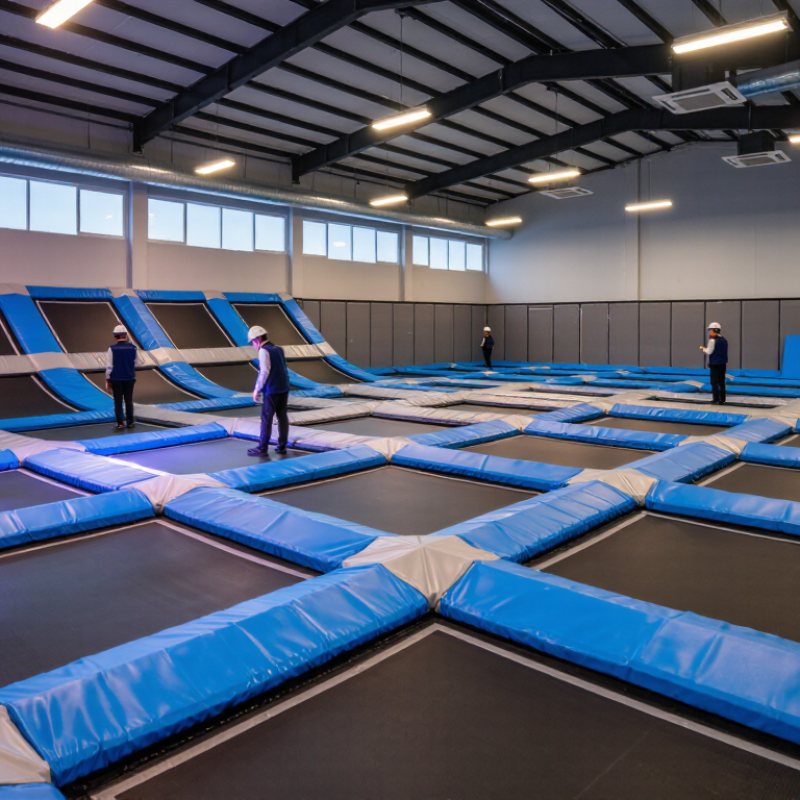
Define Your Indoor Trampoline Project Requirements
Before comparing indoor trampoline suppliers, define the project in measurable terms. Record the venue’s usable floor area, ceiling height, entrance width, power capacity, and emergency routes. Identify user ages, expected peak attendance, session length, and daily operating hours. A small family center needs different equipment from a high-volume entertainment venue.
Capacity must match the business model. Ask suppliers for calculated user limits, not attractive estimates. CPSC data estimated about 100,000 trampoline-related injuries received emergency treatment in 2014. This older benchmark still deserves attention. Request impact-attenuating flooring details, edge protection, net specifications, and inspection procedures. ASTM F2970 provides relevant trampoline safety guidance, but it does not replace local building or fire requirements. Verify every requirement with qualified local professionals.
Specify cleaning routines, replacement intervals, spare-part availability, and staff training before requesting quotations. IAAPA industry research repeatedly identifies safety, cleanliness, and guest experience as major operator priorities. Those priorities affect labor costs, not just customer satisfaction. Ask for drawings showing circulation around the equipment. Include accessible routes and clear sightlines for staff. I would also test noise levels during a busy session. That step is easy to overlook. My own planning bias is to focus too heavily on the attraction layout. Maintenance access can matter more after opening. Require documented testing, installation support, insurance information, and realistic delivery milestones from each supplier.
Verify Supplier Safety Standards and Product Certifications
When choosing an indoor trampoline supplier in 2026, verify safety evidence before comparing prices. Ask for the exact standards covering frames, springs, mats, padding, anchoring, and installation. A certificate alone is not enough. Check its issue date, product model, testing scope, and issuing laboratory. Confirm that the laboratory is properly accredited in the relevant market.
Request complete test reports, not cropped screenshots. The report should match the trampoline’s serial number, dimensions, materials, and maximum user capacity. Inspect sample units closely. Look for exposed metal, loose stitching, uneven padding, and gaps near the jumping surface. Ask how suppliers control weld quality and replace worn components. Small details matter.
Speak with the technical team, not only the sales representative. A reliable supplier can explain inspection schedules, assembly tolerances, maintenance intervals, and incident reporting procedures. Ask for installation drawings and staff training records. Review product liability insurance, recall procedures, and documented quality checks. Standards change, and old certificates may no longer cover current designs.
Be careful with perfect claims. A polished certificate can still hide weak after-sales support. I would rather see a clear limitation than an impressive promise with no evidence. Request references from comparable indoor facilities, then inspect their equipment after regular use. If the supplier avoids sharing reports or gives vague answers, pause the purchase. Safety should remain verifiable after delivery, not only during the sales meeting.
Evaluate Supplier Communication, Support, and Long-Term Reliability
How to Choose an Indoor Trampoline Supplier in 2026?
Choosing an indoor trampoline supplier requires more than comparing prices and colorful product photos. Communication often reveals how the supplier will handle future problems. During supplier checks, ask clear questions about materials, installation, maintenance, delivery, and replacement parts. A professional contact should answer specifically, not hide behind vague promises. Fast replies help, but accurate replies matter more. Request drawings, load ratings, safety instructions, and inspection records before making decisions.
Support should remain available after payment. Ask who will guide installation and how quickly technical issues are handled. Reliable suppliers can explain cleaning routines, spring replacement, padding checks, and staff training in practical language. Their documents should be easy to follow on a busy site. Test this process with a detailed question. If the answer changes between employees, consider it a warning sign. Small inconsistencies can become expensive later.
Long-term reliability is harder to judge from one conversation. Request recent customer references and ask about repeated orders, repair response, and part availability. Check whether quotations clearly describe warranty terms, delivery responsibilities, and service limits. Keep every promise in writing. I once focused too heavily on product specifications and ignored unclear support arrangements. That mistake taught me to evaluate the relationship, not only the equipment. A dependable supplier communicates consistently, admits limitations, and offers practical solutions when conditions change. Reliability takes time to prove.